ABOUT Radu Serban
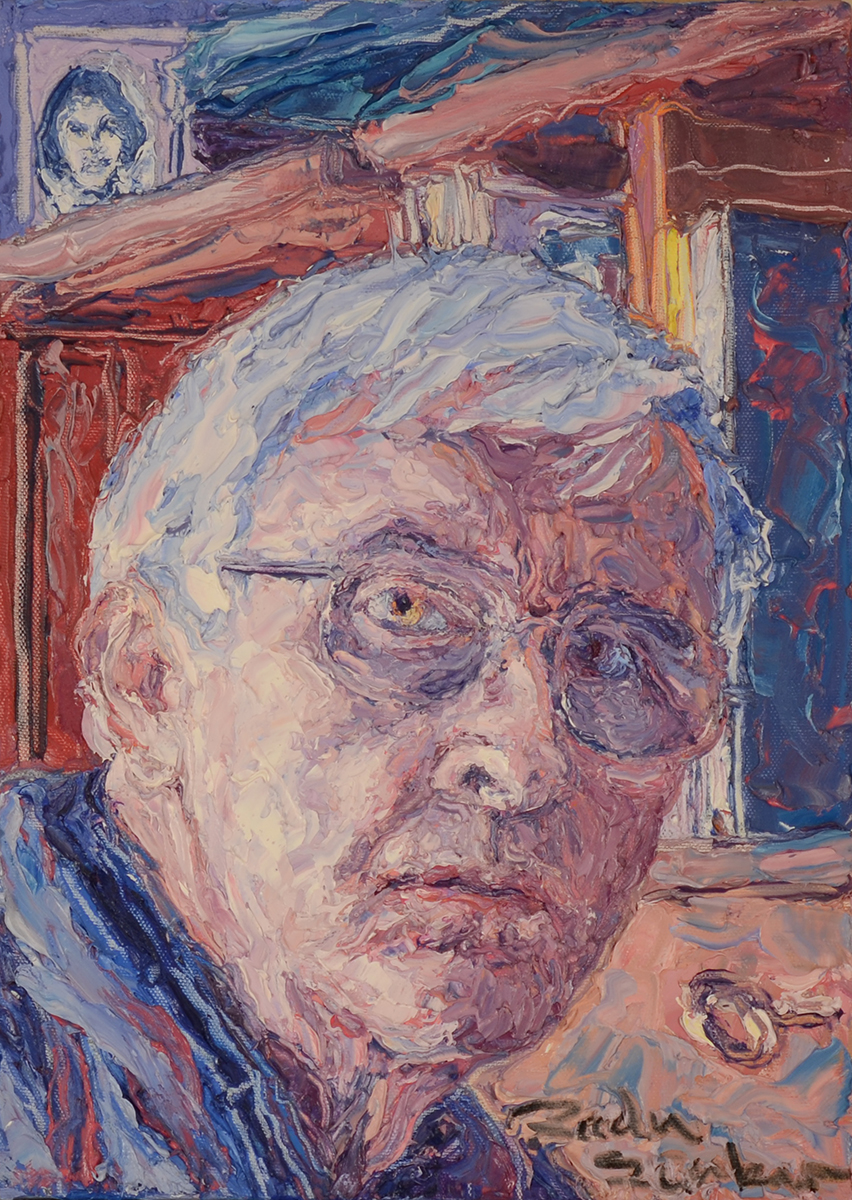
“I always thought that painting a city is like portraying a living being. A city has to have a soul, probably a multiple one. It is fascinating to try to describe with humble painter’s tools the spirit and substance of such a great and astonishing city like New York. Eventually you will discover that, like any other city, New York has its own unique happy but still true moments that ought to be inscribed on canvas. Because, as G. M. Cantacuzino said: «the cities carry in and on themselves the signs of the virtues and sins of those who have built them…»”
Radu Serban was born in 1943 in Bucharest, Romania, into a family of artists. Ever since he was a child, Radu enjoyed drawing and painting and at the young age of nine, he started taking painting classes. It was an uncle, a recognized sculptor and former Bourdelle student in Paris, who gave him a taste for French art.
While in high school, he also discovered photography as an art. As a university student, he traveled to Italy to study art and architecture. Radu’s architecture studies nurtured a discipline that can be easily noticed in his work. He practiced and was also a professor of architecture in Bucharest for several years.
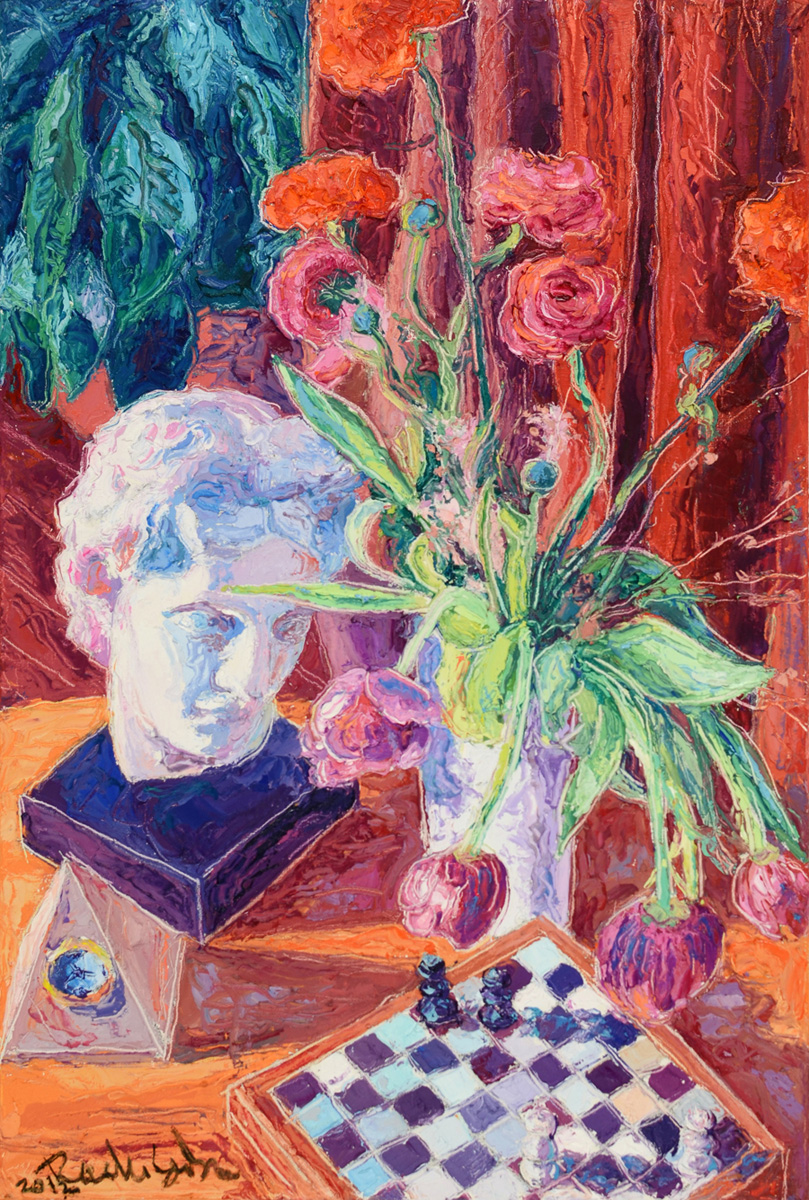
In parallel, he continued to paint, approaching a diversity of genres (still lives, interiors, portraits, landscapes, sketching) while working intensively on refining his style. Traveling and theoretical exercise, combined with teaching architecture theory and history, trained his critical perception and insight.
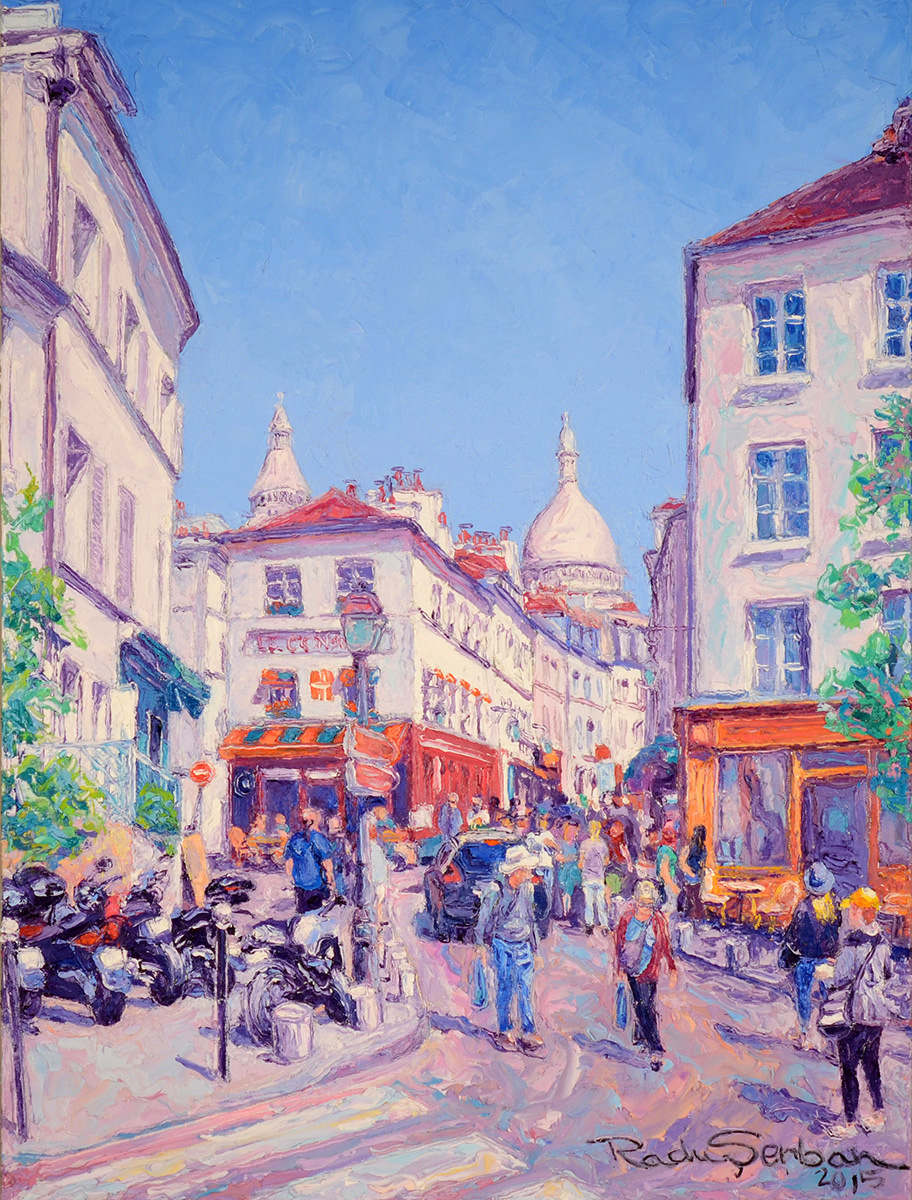
However, he struggled against the ideological restrictions imposed by the communist regime of Romania. It was very difficult for young artists to survive during such times. In 1981, he headed for Paris and a new life. Paris provided an excellent environment for his art, which flourished during this period. A year later, Radu moved to New York still under the impression of the greatness of Paris. In 1984, he exhibited in Soho the works inspired by la cité lumière.
However, very soon he became submerged in the American reality. Painting with oils and pastels, he was irresistibly attracted by the feeling of spaciousness, grandeur and freedom that a new continent gave him. He painted scenes of the Hudson River Valley, where he had settled down in the little hamlet of Tappan; he painted the greatness of the places he visited in New England and Canada, especially the lakes on which he canoed during the summer; but he was mostly captivated by the infinity of images which could be contained by a city as fascinating as New York.
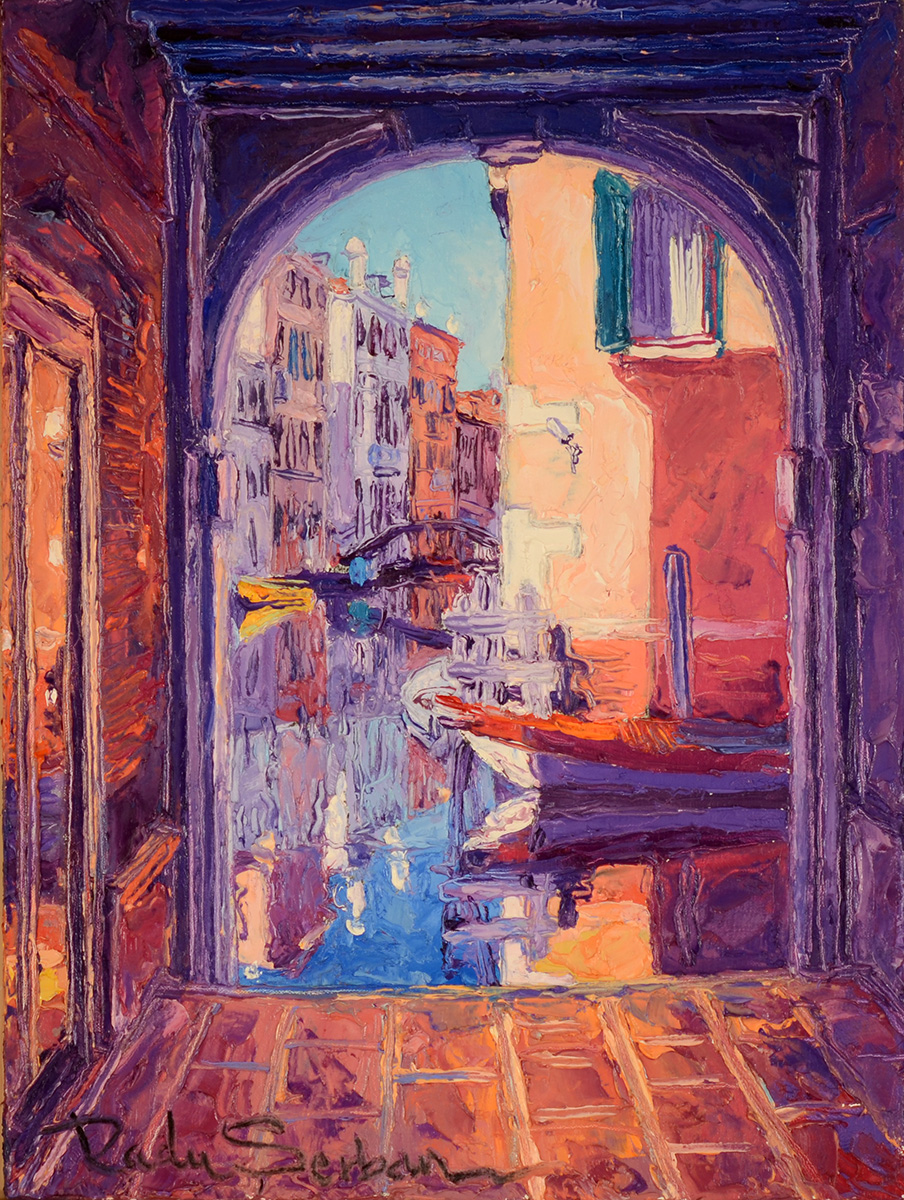
In the recent years he added to his “collections” new cityscapes of Manhattan, London, Paris, Venice.
A member of the American Institute of Architects, he holds a PhD from the University of Architecture, Ion Mincu. Currently he is pursuing his artistic career working in his studio from Tappan, in Rockland County, New York.
Artistic Timeline
1943 – early years
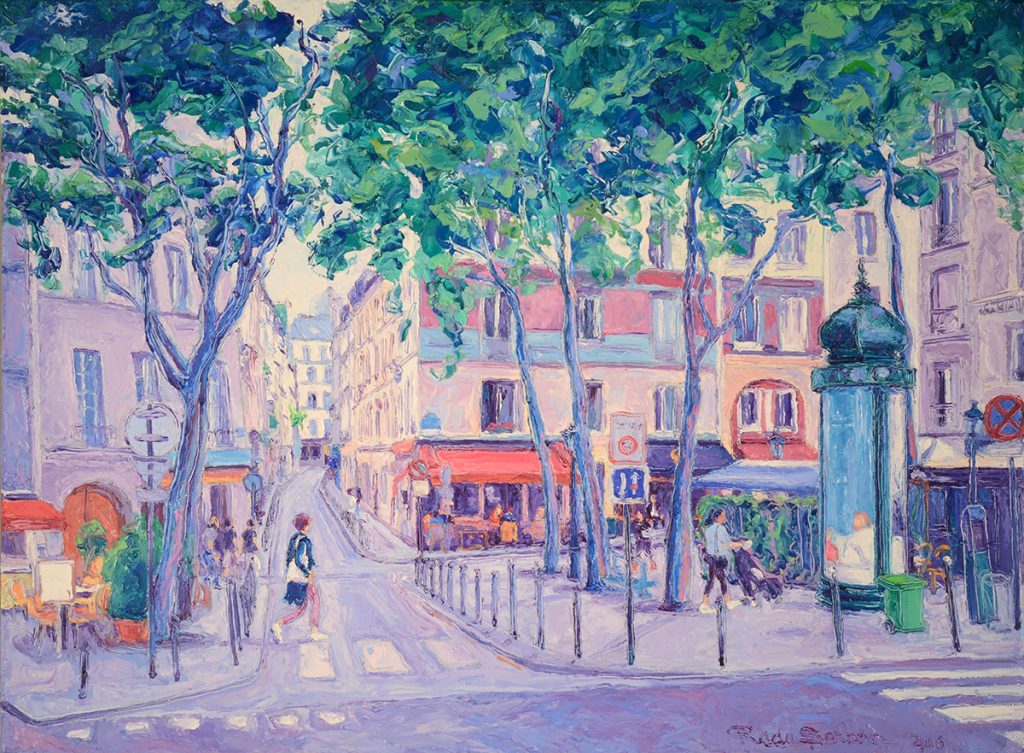
1981 – in pursuit of a new life
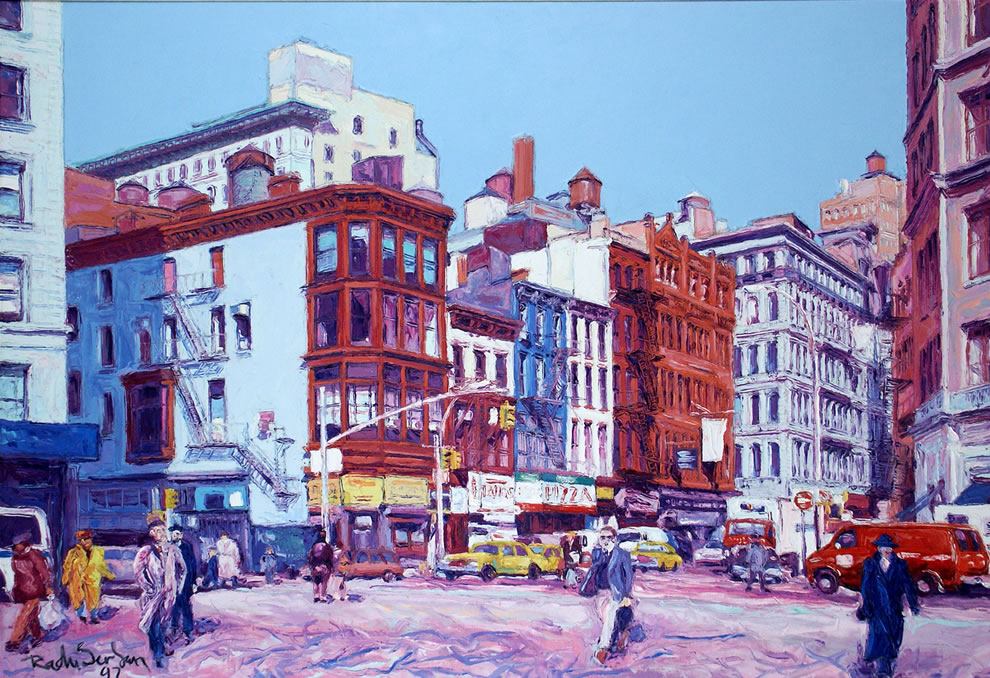
1982 – the submerging scenery of New York
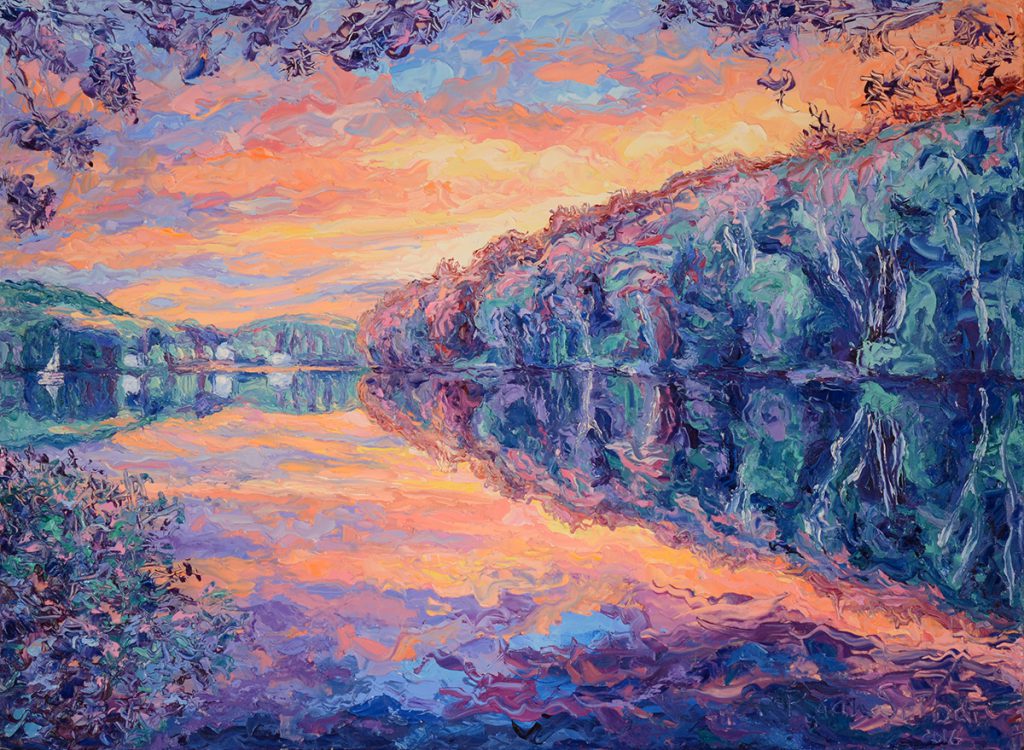
recent years
Techniques
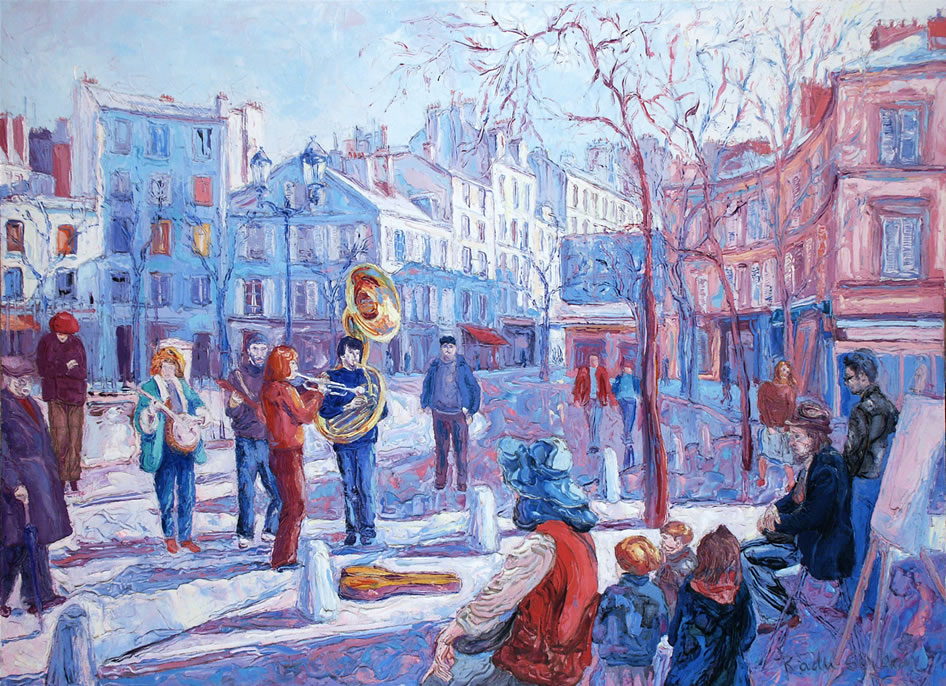
OIL:
Easily recognized by the vigorous strokes of paint molded on the canvas, created by the use of a palette knife. The paint is forced to adhere to the canvas through rapid, straight or wavering movements of the variously shaped blades of differently sized palette knives.
The result is an infinitely modulated surface of oil paint, composed of innumerable colors and tones that become like the pixels of the pictorial substance. As final outcome, the oil paste is tumultuously transformed in a relief whose plains and heights, valleys and mountains of color tell, in the most sensitive way, the stories of the chosen images that the artist fell in love with.
PASTEL:
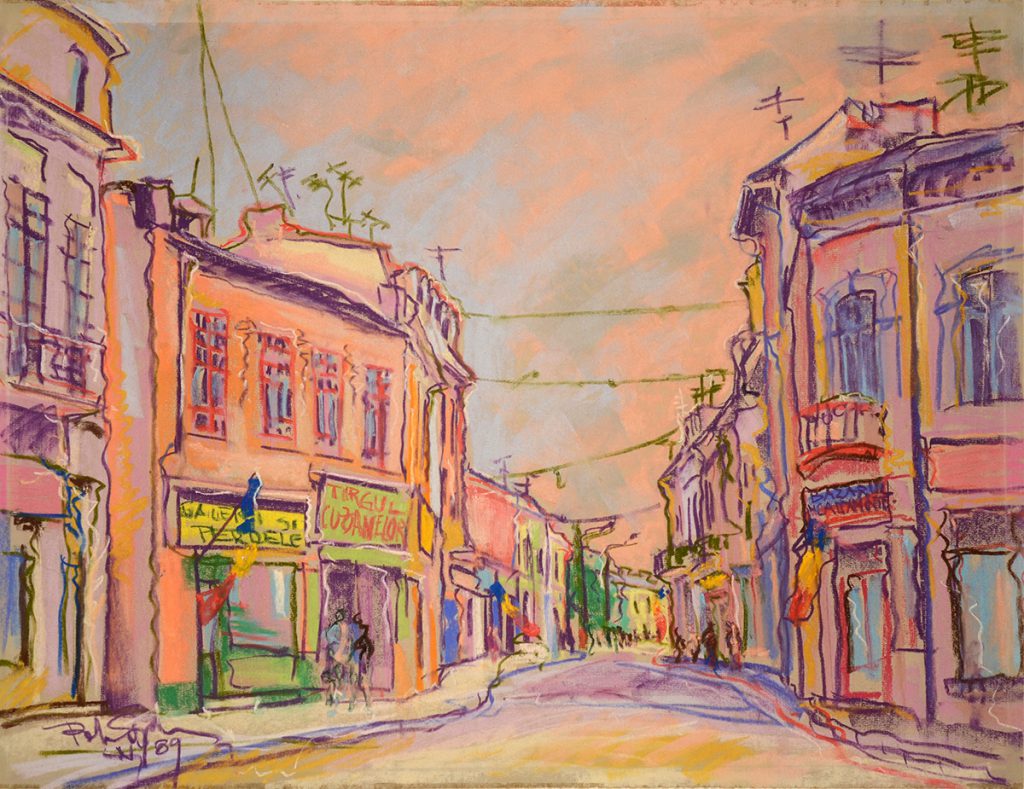
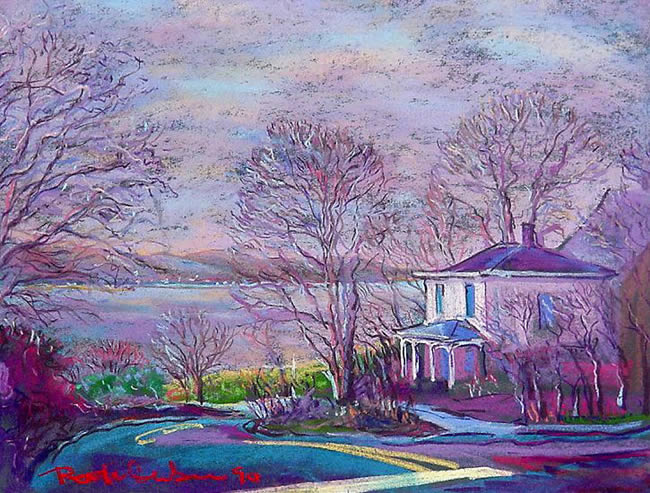
A perfect reaction of homogeneously melting colorful earths takes place in the pastel paintings of Radu Serban. On the surface of the finest paper, the chalky sticks of color draw using ample waving motions combined with traces, which explain the most unexpected hatch-like patterns working in perfect synchrony with the very color of the paper background.
The resulting work resembles an overlapping of multiply layered colorful scribbles. The density of lines of different widths and values is masterfully weighed in such a way that it allows the eye of the onlooker to still read the component elements of the colored paper and multicolored earths.
Drawings:
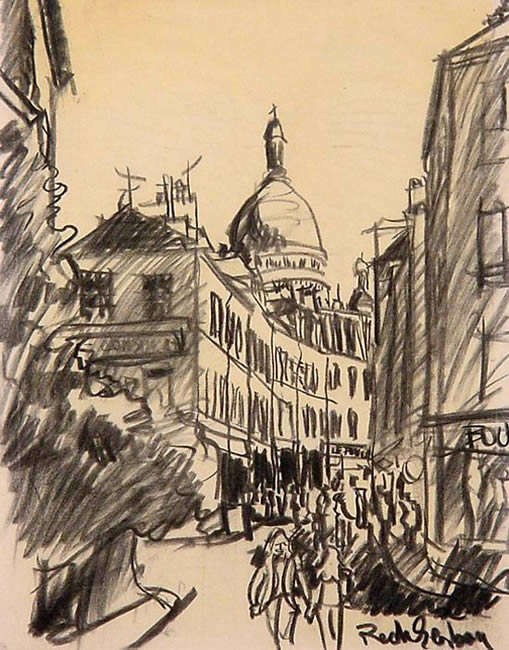
The ink pen sketches of Radu Serban have the sensitivity of a seismograph. They appear to be a continuous, spontaneous flow of the black liquid on the white of the paper.